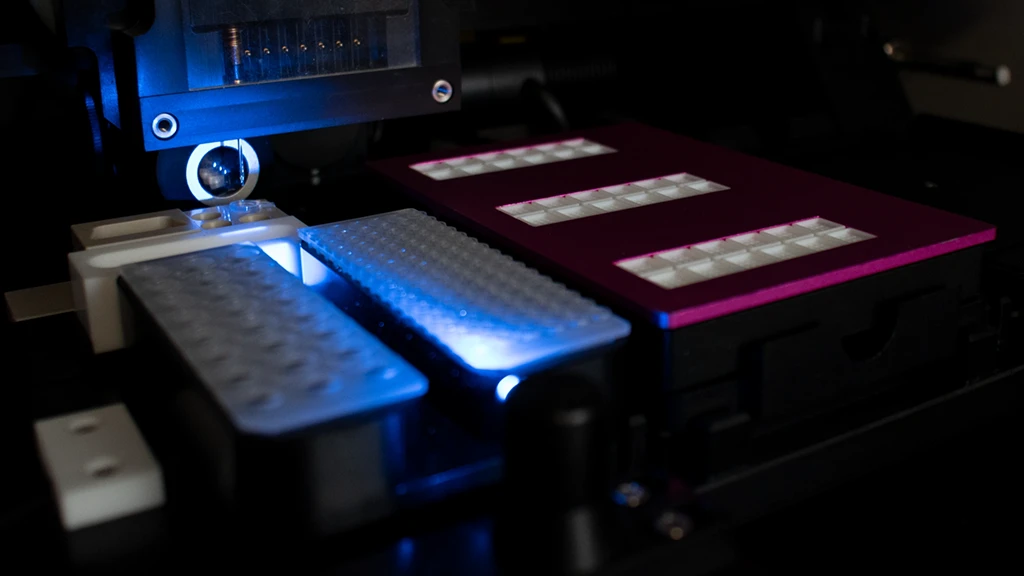
Both partners are global leaders in scientific instrumentation, specializing in advanced analytical solutions. By combining Scienion precision single cell handling and sample preparation systems with either Bruker or Thermo Fisher Scientific’s high end mass spectrometry technology, ultra-sensitive single-cell proteomics (SCP) workflows are offered.
The Challenge
To overcome the key bottlenecks in the field – such as sample loss, workflow complexity, and limited sensitivity – and to unlock new opportunities in biomedical research, drug discovery, and personalized medicine by creating a high-throughput, ultra-sensitive single-cell proteomics workflow.
-
- Low sensitivity of Mass Spectrometry: Traditional MS systems struggled to detect and quantify proteins from the tiny amounts present in single cells
-
- Sample loss during preparation: Manual pipetting and liquid transfer steps often led to significant sample loss, especially critical at single-cell scale
-
- Reproducibility and throughput: SCP workflows were often low-throughput and inconsistent, limiting scalability and statistical power
-
- Complexity of workflow setup: SCP required expertise in multiple instruments and software, making adoption difficult
The Solution
Scienion has joined forces with Bruker and Thermo Fisher Scientific respectively to develop fully integrated solution workflows that revolutionizes single cell proteomics by combining ultra-sensitive mass spectrometry with automated end-to-end single cell sample preparation.
These partnerships enable researchers to analyze thousands of proteins from individual cells with unprecedented throughput, reproducibility, and sensitivity, scaling up to more than 100 single cells per day.
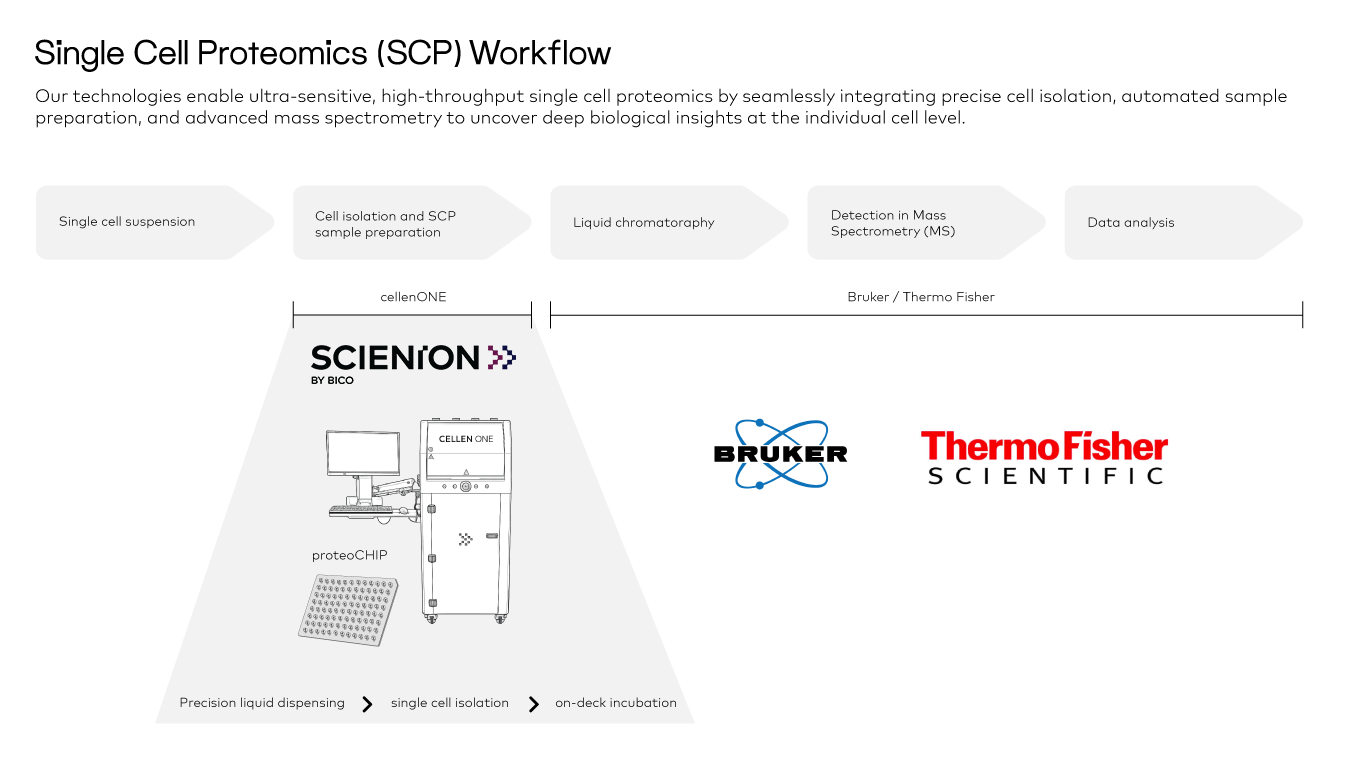 Infographic showcasing the Single-Cell Proteomics workflow. Further details on the workflow and key process considerations are provided below.
The Impact
The partners have jointly delivered a next-generation single cell proteomics solution that addresses critical market needs in precision medicine and life sciences.
Just as single cell transcriptomics has revolutionized biology by revealing the complexity and diversity of individual cells, single cell proteomics is now emerging as a key technology to complement and extend these insights.
These collaborations unlock new commercial and research opportunities by:
-
- Minimal sample loss by automated sample preparation: integrating all sample preparation steps into a single instrument and no manual pipetting
-
- Seamless compatibility: Integrated LC-MS ecosystem
-
- Ultra-sensitive detection: >4,500 protein groups per single cell
-
- High throughput: Up to more than 100 single cells/day
-
- High reproducibility: Robust quantification across replicates
-
- Commercial agreement: Co-distributed, bundled solutions tailored for pharmaceutical and academic labs expand accessibility and adoption
Together, these advancements position the solution as a powerful enabler for high-impact applications in biomedical research, drug development, and personalized healthcare.